On The Fly
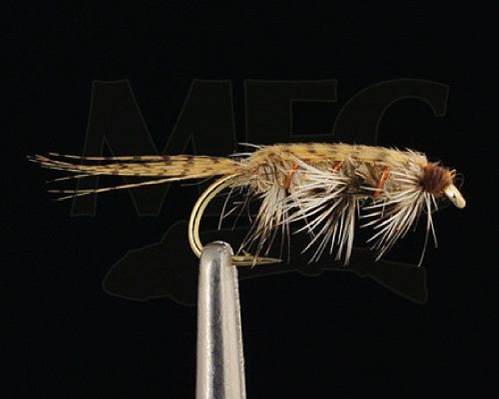
Rickard’s Callibaetis Nymph – East Lake
Hook: 1or 2 XL nymph hook. Try #12 in May, #14 in June, #16 in July/ August, then #18s, if at all.
Thread: Veevus rusty brown or Danville #47 brown are good shades for East Lake callibaetis.
Tail: lemon wood duck (or mallard flank feather dyed wood duck). Teal also good. Most important is distinct barring.
Shellback: lemon wood duck or mallard dyed wood duck again
Rib: small or extra small copper wire at bend.
Abdomen: UV Ice Dub – Callibaetis. This is the perfect color for East Lake. Dub thread or form a dubbing loop with. Ice dub is hard to dub – you can snip the fibers to be shorter which makes it a little easier.
Legs/hackle: grizzly or cree hackle
Shellback: wood duck or mallard or teal flank
Start the thread about 2 eye widths back from eye and wrap back to bend and then back up to tie-in point.
Tie in the tail. 5 or 6 fibers is enough. Pull them straight out from the feather stem before snipping them to align the barring. Tie in near eye to be almost shank length and wrap back to bend. Snip xs feather. Make sure the tail extends straight back as flank feathers have a curve to them. OK to point up but not sideways, which would distort movement. Helps to roll the fibers between your thumb and forefinger to mix up the curvatures. I usually start with an excess of fibers and trim off the strays after tying them on.
Select another bunch of wood duck or teal fibers, about 1 -2 times the hook gape width. Again, pull the fibers out before cutting them off the stem. Barring is important on this pattern. Double it over to give the shellback more bulk. Tie in by tips but wait to pull it over. [If you want a slim profile, just use a long feather for the tail, tie it down with one wrap atop the other and later pull it forward to be the shellback.]
Tie in the rib wire but don’t wrap yet.
For the abdomen dub the thread with the ice dub or form a dubbing loop. Either way, ice dub is hard to work with, so it is a challenge to keep the abdomen skinny. Wrap almost to the eye, being sure to leave enough space to tie in the hackle and then the rib wire and shellback.
Select a grizzly or cree feather with barbs about as long as the hook gape. Or a bit longer if you wish. Tie in by the butt end at the original tie-in point near the eye. Make 3 or 4 wide wraps back to the tail. Tie down the hackle with the waiting wire and wrap the wire forward to the eye area. Tie down the wire and snip off the excess wire. Snip off the feather tip. Note that the wire crosses the hackle: counter-wrapping adds durability.
Pull the shellback forward, tie it down and snip the excess. Form a small head, whip finish and lacquer.
The peacock callibaetis nymph is tied the same, but the body is 3 peacock herls and the hackle is burnt orange. The thread is olive.
Fish these flies with a slow hand twist or a longer slow pull and wait. Use intermediate line with a long leader.