Fly of the Month
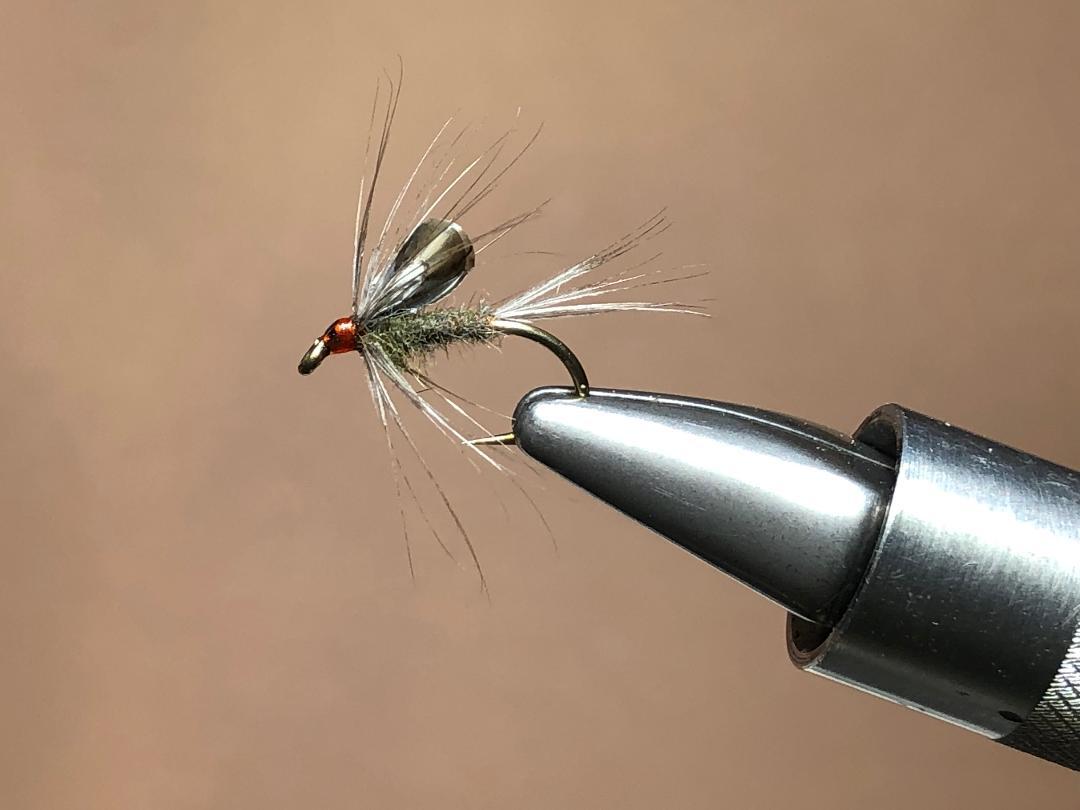
BLUE WING OLIVE, SOFT HACKLE
The fly for this month is a BWO soft hackle emerger/stillborn. Why two names? Same fly tied on two different weight hooks. The heavier hook, Daiichi 1530, is to get the fly below the surface of the water and emerge to the top. The lighter hook, Daiichi 1480 allows the fly to stay in the surface film or on top to represent a cripple or still born.
Hook – Daiichi 1530, Daiichi 1480 or your favorite brand of hook in size 16 – 22
Thread – Veevus size 8 -10 or 16 or your favorite thread in a light olive (most of the time I use silk, just call me ‘old school’)
Tail – A few hackle barbs from a dun hen hackle
Body – A very sparse thin dubbed olive to match body color of BWO
Thorax – a small ball of olive dubbing
Wing – Medallion sheeting, clear scud back
Hackle – Dun hen or Valley quail
Note #1 – Most baetis have rusty or brown eyes so when you finish the head, if you feel it’s important, switch thread colors at the head, or cheat, like me. I use a light brown permanent marker to color the 2-3in of thread I use to finish the head and whip finish.
Note #2 – If you prefer a light wire hook use a Mustad 94845, 94859 or a Tiemco 101. For a fly that floats in or on the surface film, I like a straight eye or up eye hook. It keeps the gape open on small hooks. I haven’t seen it make that much difference on subsurface patterns.
The soft hackle/spider style of fly has been around since at least the 13th century. There are thousands of patterns from Ireland, Scotland, England and the United States.
Some authors to look for and read in relation to soft hackle spiders/flymphs:
Dave Hughes “Wet Flies”
Sylvester Nemes “The Soft-Hackle Fly”, “Soft Hackle Fly Imitations” and “The Soft Hackle Addict”
James E Leisenring and Vernon S Hidy “The Art of Tying the Wet Fly and Fishing the Flymph”
This list of books will give you more styles and ideas.
Keep a hook in your vise! David Roberts